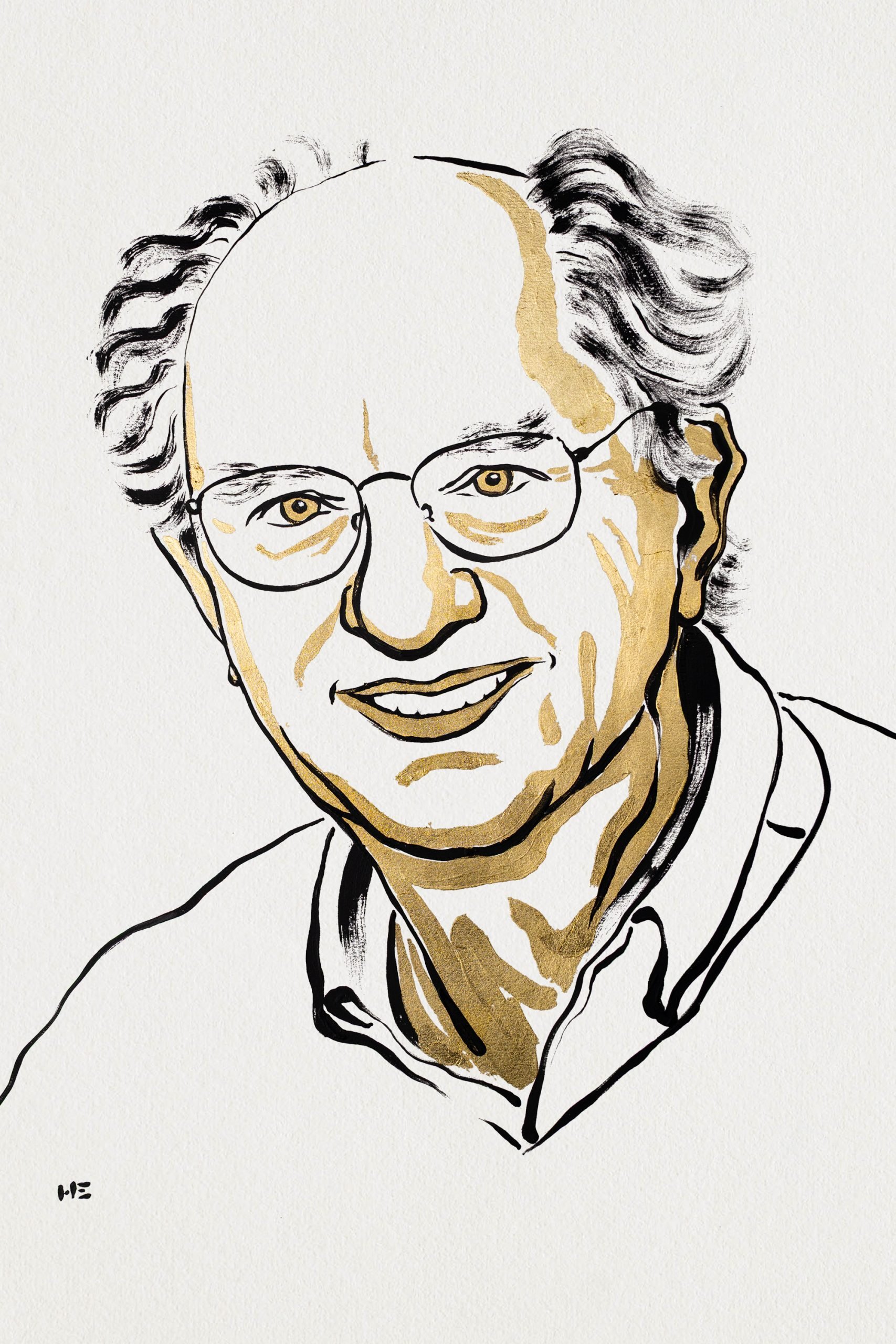
Johan Clarke
John Clarke (born 10 February 1942) is a British experimental physicist and Professor Emeritus at the University of California, Berkeley.[1] He is known for his various works on measurement devices based on superconductivity. Steven Girvin has called Clarke "the godfather of superconducting electronics".[2] In the 1980s, Clarke led a research team, that included John M. Martinis and Michel Devoret.[3] Their discoveries in macroscopic quantum phenomena using the Josephson effect earned them the Nobel Prize in Physics in 2025.[3]
Research Clarke's research focuses on superconductivity and superconducting electronics, particularly in the development and application of superconducting quantum interference devices (SQUIDs), which are ultrasensitive detectors of magnetic flux.[13][14][15] In 1985, Clarke, John M. Martinis (his Ph.D. student), and Michel Devoret (a postdoctoral researcher at the time) demonstrated the quantum behaviour of a Josephson junction.[3][16] They showed that at low temperature, a macroscopic electronic state associated with superconductors underwent quantum tunnelling at zero voltage.[17] The same year, by sending microwave pulses of the system, the resonances showed quantised energy levels.[18] This experiment was the first evidence of circuit quantum electrodynamics, that would become later the basis for superconducting quantum computing.[19][20] The work, which was recognized with the Nobel Prize in Physics in 2025, was largely funded by the Office of Basic Energy Sciences in the United States Department of Energy. [21] Clarke has also worked in the application of SQUIDs configured as quantum-noise limited amplifiers to search for the axion, a possible component of dark matter.[13]
Clarke, Michel Devoret, and John M. Martinis were jointly awarded the 2025 Nobel Prize in Physics "for the discovery of macroscopic quantum mechanical tunnelling and energy quantisation in an electric circuit".[30]
